
A common misconception is that gas optimization means finding the lowest fee and clicking confirm. In decentralized finance, that is often the wrong unit of analysis. The real cost of a transaction includes the network fee, the possibility of a failed execution, the cost of approving an unnecessary contract, and the opportunity cost of moving assets across chains. A transaction that looks cheap in the wallet can still be economically poor if it uses the wrong network, requires several inefficient steps, or exposes the user to an unexpected contract interaction.
This is why transaction simulation and multi-chain wallet design matter. They do not eliminate blockchain fees or make smart contracts risk-free. Instead, they improve the information available immediately before signing. For a US-based DeFi user comparing Ethereum and EVM-compatible networks, the practical question is not simply “What will this transaction cost?” It is “What will this transaction attempt to do, on which chain, with which assets, and under what failure conditions?” That is a more useful mental model for choosing and using a wallet extension.
From gas price hunting to transaction economics
Earlier Ethereum wallets largely presented a narrow choice: approve a transaction, reject it, or manually adjust gas settings. That model reflected the infrastructure of the time. Users interacted with one dominant network and often treated the fee market as an isolated auction. A higher gas price could improve the chance of prompt inclusion, while a lower one might leave a transaction pending. The interface exposed a technical parameter but not necessarily the economic consequences of the action.
Modern DeFi makes that approach inadequate. A swap may involve an allowance check, a token transfer, a router contract, and settlement through a liquidity pool. A lending action can change collateral, debt, liquidation exposure, and interest accrual. A bridge transaction may begin on one chain and depend on later activity on another. Gas is therefore only one component of transaction quality. A transaction with a low nominal fee may be inferior to a more expensive one if it fails, executes with excessive slippage, or leaves an approval that the user no longer needs.
Gas optimization has several layers. At the network layer, users can select a chain whose fee market and application liquidity fit the task. At the transaction layer, they can avoid redundant approvals or combine actions where the protocol supports it. At the execution layer, they can inspect whether the call is likely to succeed under current state conditions. At the portfolio layer, they can account for the fact that assets distributed across several networks may create operational costs even when individual transactions are inexpensive.
The important distinction is between fee minimization and expected-cost reduction. Fee minimization asks how to pay less for the next transaction. Expected-cost reduction asks how to lower the combined cost of fees, failures, delays, slippage, and avoidable risk. The second objective is harder, but it is closer to how experienced DeFi users actually manage capital.
What transaction simulation can and cannot tell you
Transaction simulation is a pre-execution estimate of what a smart-contract call may do if it were executed against a particular version of blockchain state. In practical terms, a wallet or supporting service attempts to run the proposed call without broadcasting it. The resulting information may indicate whether the transaction would revert, which assets might move, what approvals are involved, or whether the requested action appears inconsistent with the user’s intention.
This is a major improvement over a blind signing flow. A raw transaction contains technical fields such as a destination address, encoded call data, gas limits, and fee parameters. Most users cannot infer the economic meaning of that data by inspecting it directly. Simulation translates at least part of the call into a decision surface: this contract may receive a token, that asset may be spent, and the call may fail because a condition is not met.
Yet simulation is not a guarantee. It is conditional on the state that was available when the estimate was produced. DeFi state can change between simulation and inclusion. A pool price may move, liquidity may be removed, an allowance may be consumed elsewhere, or a protocol parameter may change. On a busy network, even the transaction’s position relative to other pending transactions can affect the outcome. The correct interpretation is therefore probabilistic and contextual: a favorable simulation lowers uncertainty, while a warning raises it. Neither result proves that the transaction is safe.
There is another boundary condition: a simulation can describe what a contract call does without judging whether the underlying application is trustworthy. A malicious contract may behave exactly as programmed. A transaction can execute successfully while transferring more authority than the user intended, granting a broad token allowance, or interacting with a counterfeit token. Simulation is strongest as an execution-risk tool, not as a substitute for contract due diligence, asset verification, or operational discipline.
Rabby-style review versus conventional wallet confirmation
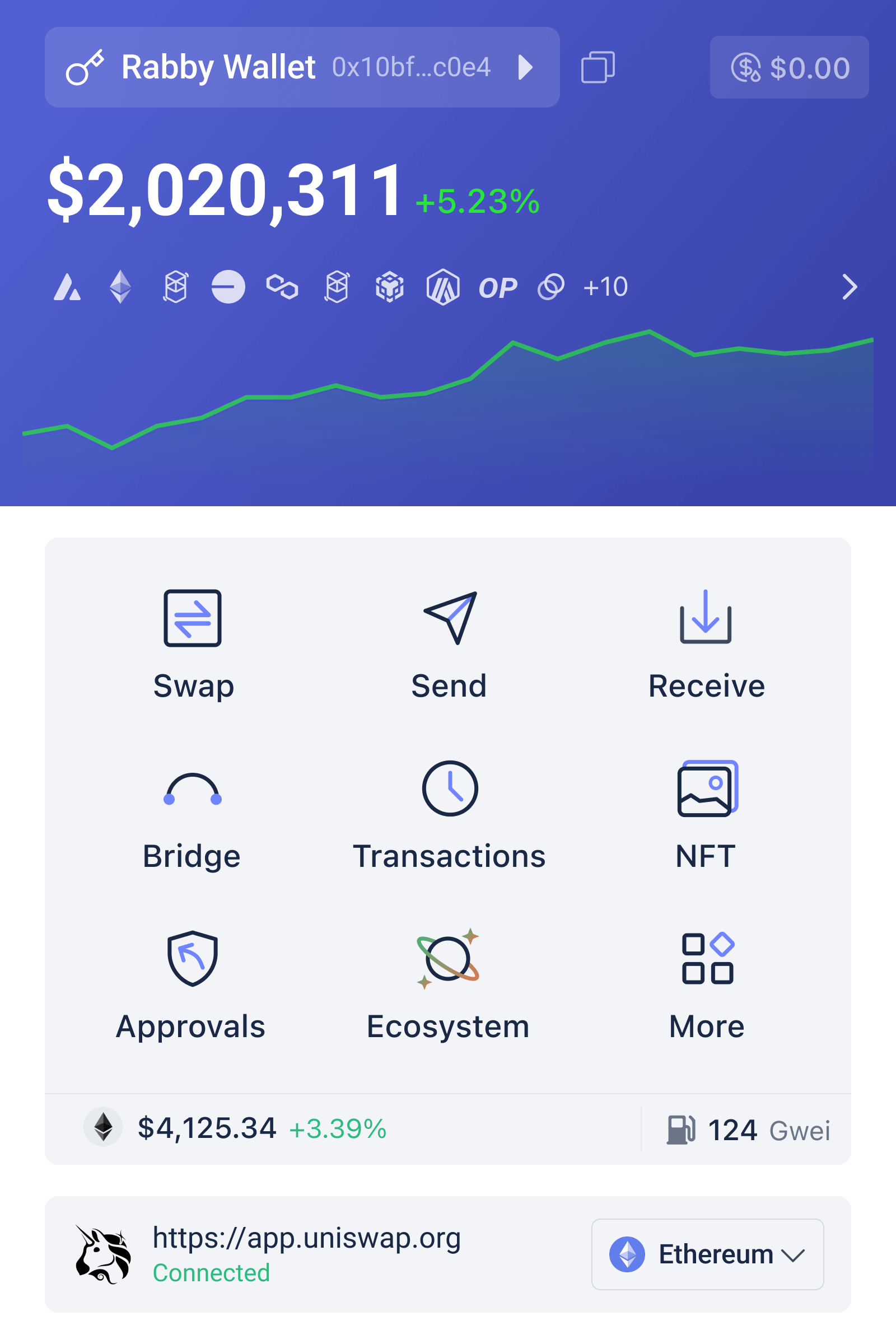
For users evaluating a Rabby browser extension, the relevant comparison is not “one wallet is safe and another is unsafe.” The more defensible comparison concerns how much interpretation the interface provides before signing and how well it supports users who move among EVM networks. A conventional wallet may offer a straightforward confirmation dialog with fee information and network details. A simulation-oriented wallet aims to add a richer interpretation of the proposed call, particularly when the action involves several contracts or unfamiliar DeFi applications.
The trade-off is complexity. More information can improve judgment, but it can also create a false sense of completeness. A user who sees a clean simulation may stop asking whether the website itself is authentic or whether the token approval is broader than necessary. Conversely, a warning may reflect a contract design that the simulator cannot fully interpret rather than an actual exploit. The best interface is not the one that removes every warning; it is the one that helps the user distinguish an understandable warning from an unacceptable unknown.
Multi-chain support creates a similar trade-off. A single wallet interface for Ethereum and other EVM chains reduces the need to manage separate extensions, seed phrases, and network-specific workflows. It can make chain selection more visible and make balances easier to compare. The project’s weekly news dated August 24, 2026 presents Rabby as a wallet for Ethereum and EVM networks and specifically highlights extension access through Chrome and Brave. That positioning is relevant to users seeking one browser-based control point, but marketing language alone does not establish that every application, chain, or transaction will receive the same depth of analysis.
A multi-chain wallet also concentrates operational responsibility. If one recovery phrase or signing device controls assets across several networks, a compromise can have a wider impact than a compromise limited to one account or application. Network confusion is another persistent risk: an asset with a familiar ticker may exist on multiple chains, while a bridge or exchange withdrawal may require a particular destination network. A unified interface helps with visibility, but it does not remove the need to verify the chain, token contract, recipient, and application domain.
How to use simulation as a repeatable decision framework
Before installing a browser extension, users should obtain it through a source they can independently verify and check that the publisher, extension permissions, and browser listing are consistent. Readers beginning that process can review the rabby wallet download resource, then confirm the installation details inside the browser rather than relying on an advertisement or a search result alone. A legitimate-looking interface is not sufficient evidence; wallet security begins with the software supply chain and the protection of the recovery phrase.
Once installed, a useful review process has four questions. First, is the wallet connected to the intended chain? Second, does the transaction involve the expected application and recipient? Third, which assets and permissions will change if the call succeeds? Fourth, what would make the transaction fail or become economically unattractive before it is included? These questions are more durable than any particular fee setting because they apply to swaps, lending, staking, governance, bridges, and NFT marketplaces.
For gas decisions, compare the cost with the value and urgency of the action. A transaction that saves a small fee but takes place on a chain with thin liquidity may produce worse execution through price impact. A cheaper network may also require a separate bridge transaction, adding another contract interaction and another point of failure. In the United States, where tax reporting can already become complicated across wallets and networks, fragmented activity may also increase record-keeping demands, even when the technical fee is low.
Approvals deserve special attention. An approval is not always the same as a swap, but it can grant a contract permission to transfer tokens later. A simulation that makes this distinction visible is useful because the immediate transaction may appear routine while the lasting permission is more consequential. Users should ask whether the allowance is limited to the amount needed, whether the spender is the intended protocol contract, and whether an old approval should be revoked. Revocation itself costs gas, so the decision is a risk-management trade-off rather than an automatic rule.
Where the comparison breaks down
No wallet interface can solve poor protocol design, compromised websites, manipulated prices, or careless key management. Simulation services may depend on remote infrastructure, and their results can vary with node quality, state freshness, unsupported contract patterns, or chain-specific implementation details. Some complex transactions are difficult to summarize accurately. A user should treat an unrecognized action as a reason to pause, not as an invitation to sign merely because the fee is low.
There is also a broader limitation in the phrase “multi-chain wallet.” Supporting many EVM networks at the interface level does not mean that those networks offer equivalent security, decentralization, liquidity, finality, or application quality. EVM compatibility standardizes important developer patterns, but it does not make chains interchangeable. The wallet can help display the difference; it cannot guarantee that a bridge is solvent, that a sequencer is available, or that an application’s economic incentives are sustainable.
The near-term question is whether wallet software will become a more reliable risk interpreter rather than merely a transaction signer. That outcome is plausible if simulation becomes more transparent, chain-aware, and explicit about uncertainty. The signal to watch is not the number of warnings a wallet displays, but whether users can understand why a warning appeared, what assumption produced it, and what action would reduce the risk. Better explanations would matter more than a promise of frictionless DeFi.
FAQ: gas optimization, simulation, and multi-chain use
Does transaction simulation guarantee that my DeFi transaction is safe?
No. Simulation can identify likely execution results, reverts, transfers, and some approval risks under a particular blockchain state. It cannot guarantee that a contract is honest, that a website is authentic, that prices will remain stable, or that state will not change before inclusion. Use it as one layer of review.
Is the lowest gas fee always the best option?
No. The lowest fee may come with slower confirmation, a greater chance of failure, or a network with weaker liquidity for the intended trade. Compare total expected cost: network fee, slippage, failure risk, bridge requirements, and the urgency of the transaction.
Why use a multi-chain wallet for EVM DeFi?
A multi-chain wallet can reduce interface switching and make accounts, networks, and balances easier to manage in one browser workflow. Its limitation is that convenience can hide meaningful differences between chains. Always verify the selected network, token contract, application, and recipient before signing.
The most useful conclusion is modest but practical: gas optimization is a decision problem, not a button. A wallet extension that combines multi-chain visibility with transaction simulation can improve that decision by exposing assumptions before capital moves. It still leaves the final judgment with the user. That is not a weakness of the model; it is a reminder that better information reduces avoidable mistakes, while responsibility for the asset, protocol, and key remains human.

Leave a reply